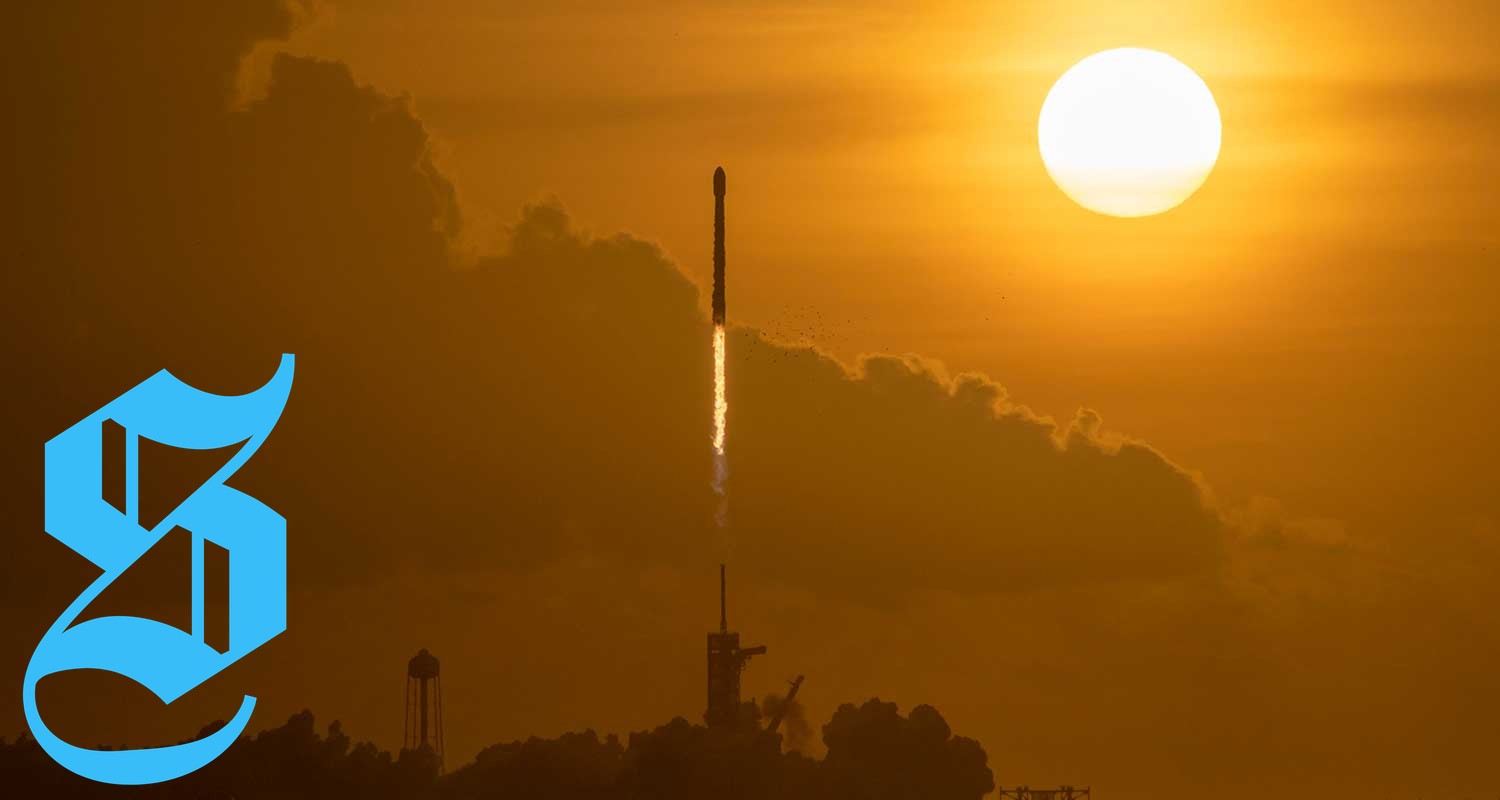
In a bold move that has the potential to reshape the telecommunications landscape, SpaceX has signed a groundbreaking deal to acquire low-band spectrum assets from private equity firm Grain Management. The reported $8 billion deal marks a significant step for Elon Musk’s rocket and satellite company as it aims to mount a direct challenge to America's established mobile operators.
The acquisition involves nationwide coverage of 800MHz spectrum, which Grain recently obtained from T-Mobile. However, the deal is contingent upon receiving the green light from the US Federal Communications Commission (FCC). The terms of the financial transaction remain undisclosed, and neither SpaceX nor Grain Management has commented on the matter as of yet, following inquiries from Reuters.
This acquisition could be seen as a game changer in the telecommunications sector. SpaceX’s existing Starlink Mobile satellite-to-phone service already utilizes 2GHz mid-band spectrum for high-bandwidth demands globally. Its previous agreements to purchase spectrum from EchoStar, totaling around $19.6 billion, underline the seriousness of the company’s ambitions.
What’s crucial about low-band frequencies, like the 800MHz spectrum, is their ability to travel greater distances and penetrate physical obstructions such as walls and trees. This capability could help in overcoming the inherent technical hurdles associated with satellite-based mobile networks.
The implications of this development are significant. With the combination of low-band airwaves and high-frequency satellite capabilities, SpaceX is positioning Starlink Mobile to entirely bypass conventional cell towers. This would enable them to compete directly with major US carriers, not just in terms of nationwide coverage but also in terms of reliability in urban and suburban settings.
SpaceX's ambitions are further corroborated by comments from President Gwynne Shotwell, who indicated that the company is working on establishing ground infrastructure needed to make Starlink “a true mobile service.” She mentioned that SpaceX expects to attract many customers away from existing carriers.
Industry Reactions
The reaction on Wall Street has been tumultuous. Following the announcement of the acquisition, shares in major mobile carriers like T-Mobile US, Verizon, and AT&T fell by approximately 6% in after-hours trading. It’s evident that the traditional carriers perceive SpaceX’s move as a serious threat.
Earlier in May, the three leading carriers had agreed to explore a satellite-focused joint venture—a response many analysts consider to be a direct acknowledgment of the threat posed by SpaceX. William Blair analysts wrote,
“The incumbent wireless carriers have been vocal in expressing skepticism that SpaceX’s network will be able to match the quality of their networks.”
Despite these doubts, they also noted,
“We expect SpaceX to offer a very compelling Starlink broadband and Starlink Mobile bundle. The company may also include Grok in the package,”referring to the AI chatbot that SpaceX acquired earlier this year.
Verizon's spokesman Rich Young explained some of the ongoing challenges, stating,
“This company can have tons of spectrum available, but if they do not have the network to use it, it doesn’t matter. It’s just empty airwaves.”His comments underscore the skepticism surrounding whether SpaceX can effectively leverage its new assets into a reliable service.
In contrast to those skeptical views, FCC Chairman Brendan Carr welcomed the acquisition, indicating that it would lead to increased investments and opportunities for a range of service providers. He stated,
“We are going to see more investment, more opportunities for a range of providers, and America leading the world in next-gen technologies – to the benefit of consumers all across the country.”
David Grain, CEO of Grain Management, expressed optimism about the deal, suggesting that it had
“the potential to change where and how Americans connect.”
The Future of Starlink Mobile
Moreover, this week, the FCC also approved SpaceX’s application for its second-generation Starlink Mobile constellation. This new approval allows for the launch of 15,000 satellites designed to operate in very low Earth orbit, which will enhance bandwidth and reduce latency for standard mobile handsets.
But the horizons of Starlink Mobile reach beyond the United States. In August, Starlink Mobile reached the African continent, launching its service in the Democratic Republic of Congo through a partnership with Airtel Africa. This is significant because it marks what is being termed as Africa’s first commercial satellite-to-phone service.
At launch, the service enables text messaging and lightweight applications like WhatsApp on compatible Android phones, showcasing the capabilities of satellite technology in bridging communication gaps in regions with limited infrastructure.
Interestingly, while Starlink seems to be expanding its global footprint, it faces challenges entering South Africa's market. Local regulations, particularly those mandating that licensees must be at least 30% owned by historically disadvantaged groups, have led to SpaceX not applying for required licenses from the local communications regulator, Icasa. In June, Icasa announced that it couldn't currently issue new network licenses to satellite constellation operators, making it clear that any feasible route to market would involve acquiring an existing license.
This regulatory environment illustrates the complexities that innovative companies like SpaceX face when attempting to enter markets in a global context. While consumer expectations of connectivity continue to rise, traditional structures may not always be equipped to accommodate them.
As SpaceX continues to drive forward with its ambitious plans, the unfolding landscape begs the question: Can the marvel of satellite technology be the solution to not just rural connectivity in developed nations, but also to overcoming the infrastructure challenges faced in developing economies? For now, all eyes are set on SpaceX and its capacity to transform how we connect to the world.
As the saga continues, one thing is certain—telecommunications as we know it is ripe for disruption.
No comments yet. Be the first to share your thoughts!