The place where I started playing football was a dusty street, the pitch nothing more than a stretch of earth. I was seven years old and it was the only thing I knew how to do.
I grew up in Jardim Paineiras, a working-class neighbourhood on the outskirts of Diadema, a city just outside Sao Paulo. My older brother had been born when our parents still lived in a shack.
By the time I came along, things had improved slightly – we lived in a small brick house, but it was a very simple home, just about enough for the five of us. My sister slept in the same bed as my mother and father, and I shared a mattress with my brother. Luxury it definitely wasn’t.
My parents worked tirelessly to make sure we never went hungry
Financially, we were just OK. We didn’t own much, but I can’t complain about my childhood overall. My parents never let food run out at home.
They worked tirelessly to make sure that we never went hungry. My mum was a cleaner and my dad had a job at Ford. That’s how they raised the three of us.
What truly fascinated me as a child was the street football, those endless two-versus-two battles, with the goals marked out by a pair of flip-flops. Being left-footed, I’d constantly beg to borrow someone else’s left boot.
My parents couldn’t afford to keep buying me new pairs, and since I played nonstop, my boots wore out quickly. Sometimes I’d end up playing with one bare right foot and someone else’s boot on my left.
Beyond the street kickabouts, I grew up in the varzea – the gritty, uneven dirt pitches of Sao Paulo’s amateur football scene. It’s where I learned two priceless lessons.
The first was losing any fear. The varzea toughened me up – I was always playing against older, stronger lads and got intimidated a lot in the beginning.
Over time, I became braver. Dribbling was my natural weapon, and the more they tried to scare me off, the more I wanted to beat them with the ball at my feet. I got kicked, shoved into walls and fences, was fouled constantly, but kept going.
Out there, I grew a thick skin, so when you finally get to step into a professional derby under pressure, you’ve already lived that battle countless times. At only 10 years old, I’d already learned not to be intimidated.
“The dirt pitches of Brazil gave me the gift of ball control. You couldn’t trust the ground, so you had to improvise constantly. That chaos sharpened me technically” How Denilson went from the streets to the world’s most expensive player
Word spread that I had talent. People kept telling my dad to take me to a club, but he worked too much and barely had time. His weekends were precious, and when possible, he’d come to watch me play.
My godfather – my dad’s brother – was in a better position financially, and his son Ricardo already played at a local football school, Pauliceia, in São Bernardo, next to Diadema.
One day, the coach there, a man called Bene, asked my uncle if he knew of any talented left-footers who had been born in 1977. He thought of me immediately. I was taken along, did the trial and, according to him, Bene said, “I asked you to bring me a kid to test, but you’ve brought me one who’s already good enough to play.”
I still kept my passion for the varzea alive, but now I was also training with Pauliceia. Suddenly, I was playing in more organised competitions across the ABCD region – Santo Andre, Sao Bernardo, Sao Caetano and Diadema – representing the club in every corner.
At one point, a select team was picked with the best players from the area and we travelled to Argentina to face Boca Juniors, River Plate and other traditional sides. We couldn’t afford hotels, so the organiser arranged for us to stay with host families.
That’s when something funny happened: the family who took me in thought I was an orphan, and by the end of the trip, they wanted to adopt me! Of course, I had to politely turn them down, explain that I had a family back in Brazil and return home.
Soon after that, we were invited to a tournament in Caraguatatuba, taking on the local side and the giants of São Paulo – Palmeiras, Corinthians, Santos and São Paulo FC. I stood out, and that’s when the latter came calling.
At just 12 years old, I joined their academy setup without even going on trial. I still remember my very first session at the Estadio do Morumbi – I was kitted out head-to-toe in club gear, with a proper pair of boots handed to me. For a kid from Diadema, it was pure dreamland.
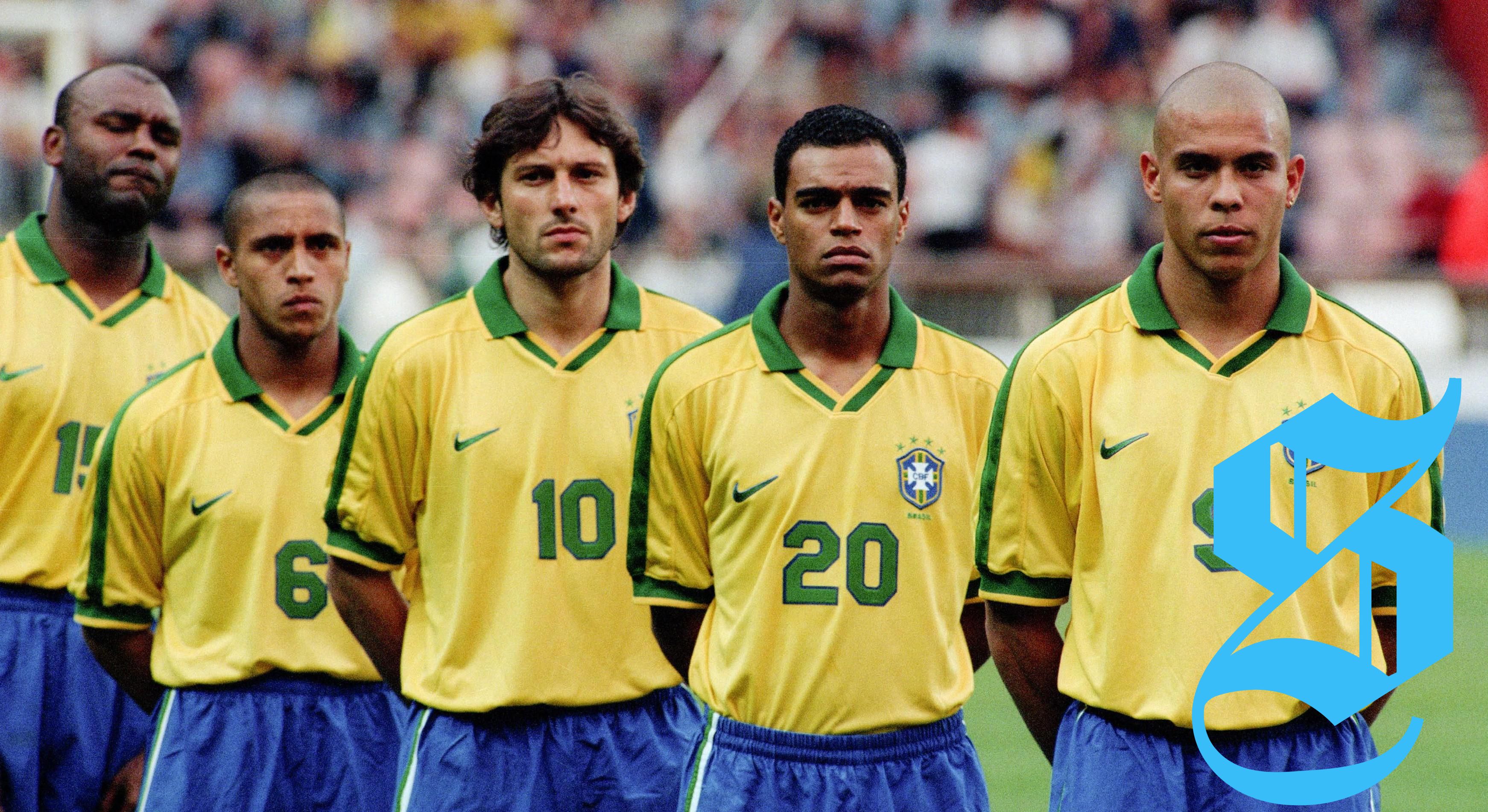
Moving into Sao Paulo at 12 freed up more space at home for my siblings, since I lived in the club accommodation underneath the stands at Morumbi. Dozens of kids chasing the same dream shared dormitories stacked with bunk beds.
The club provided food, education and lodging, meaning one less mouth for my parents to feed. I’ll always be grateful to São Paulo, since they cared deeply for their academy boys.
To my relief, I didn’t suffer too much with homesickness. The secret was that I loved playing football too much. I was already doing it every day in Diadema, and now I was doing it at a massive club with proper facilities. I ate well, slept in my own bed – life was bliss!
Responsibility arrived naturally as I grew, surrounded by a winning culture. The competition toughens you up little by little. My memories are of enjoying myself during the week doing what I loved most, then going back home at weekends to be with my parents.
The turning point came when, at just 16, I jumped straight into the first team. It was 1994, my last year as a youth player, and instead of finishing that stage, I skipped the final youth year, as well as two or three years of juniors. In effect, I was fast-tracked about four years of development.
Was it challenging? Absolutely. But also wonderful. I was walking into a squad that had just won everything – the state championship, the Brasileirao, two Copa Libertadores and even two Intercontinental Cups against Johan Cruyff’s Barcelona and Milan’s Fabio Capello.
There was a winning identity, and I had to earn my place fast. My salary was around 150 reais, but the match bonuses – the famous bicho – ranged between 1,000 and 1,500 reais. That made a massive difference. I gave the money straight to my dad.
To be honest, those bonuses were probably more than he earned in a whole month. Thanks to that, he managed to speed up the home improvements he’d been working on through sheer sweat – tiling the floor, plastering and painting the walls, buying a wardrobe, a bigger bed. It felt incredible to contribute.
I started out on the bench but soon became a starter during the 1994 Copa CONMEBOL and began to get attention both in Brazil and abroad.
The more Sao Paulo won, the more I could help at home. Footballers today complain about the packed calendar, but I couldn’t. Every victory meant more financial relief for my family.
Instead of buying just one litre of milk, we could afford two. Instead of four bread rolls, we could buy six. Little upgrades like a better shirt for my parents or wearing new flip-flops instead of old, worn-out ones meant the world to us.
Even now, it makes me emotional thinking about it. Helping my parents, who had sacrificed everything for us, was priceless.
Playing at Sao Paulo made me value my achievements even more, but the values I learned at home stayed with me everywhere. I was lucky that God gave me that gift and that the right people believed in me at the right time.
One of those was the first-team boss, Tele Santana. He first watched me filling in during a reserve-team training session and liked what he had seen.
Looking back, it all happened at the right time. I wasn’t even a starter in the youth teams when I was promoted. The lads born in 1976 had priority and the coach didn’t rate me. At one point, he even wanted to release me, but the directors insisted I stayed.
I remember my legs shaking at the start when I first joined in with the senior players for training. But once the ball rolled, I forgot my nerves and just played with joy.
Was I nervous? Of course! But as the session went on, it melted away. I did what I always did: played football with a smile.
“HELPING MY PARENTS, WHO SACRIFICED EVERYTHING FOR US, WAS PRICELESS. IT STILL MAKES ME EMOTIONAL”
I’d wake up earlier than anyone, eat my breakfast and already be in my kit when the senior players came down. As skinny as I was at 16, I was ready to seize the opportunity.
Tele intimidated me massively. He radiated authority, always serious, rarely smiling. Imagine – a kid from Diadema stood side-by-side with the man he used to watch while working as a ballboy during the club’s Copa Libertadores matches.
I felt a mix of emotions that day, knowing where I came from and how far I had come.


No comments yet. Be the first to share your thoughts!