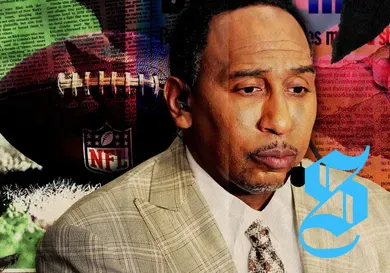
Recently, a harrowing event unfolded in Minnesota as ICE agents shot Renee Good, an American poet, without warning. Good’s last words resonated deeply in the aftermath: “I’m not mad at you.” Despite her acknowledgment of the situation, the agent fired, calling her a "f*ckin' b*tch" right before the shot was fired. Amid rising protests, Stephen A. Smith took to his national platform to controversially assert the shooting was completely justified. His choice to side with authority instead of acknowledging community outrage drew intense backlash.
This pattern of aligning with institutional power has become a hallmark of Smith’s commentary over the last decade. At times when historical injustices are brought to light, Smith often opts for a pragmatic perspective that favors authority and legality, blurring the lines of accountability.
During the height of Colin Kaepernick’s protests against police brutality in 2016, Smith criticized Kaepernick’s tactics instead of addressing systemic issues that spurred the protests. Instead of engaging with the root causes of the protest, he deviated to disparage Kaepernick’s choices, revealing a concerning trend of dismissing important discussions around race and justice.
Politics of Respectability
Smith’s critique extended to Congresswoman Jasmine Crockett as well, belittling her powerful response in the face of Republican opposition by labeling her comments for the streets. This underscored the implicit biases Smith holds, reflecting a trend of respectability politics that often holds Black voices to higher standards than their counterparts.
Even significant figures like Vice President Kamala Harris have not escaped this critique. When Harris released her memoir, Smith shrugged off its importance, failing to recognize the historical significance of her position. His dismissal perpetuates the narrative that limits the value of Black women’s voices.
Siding with the System
Smith's past comments surrounding Ray Rice’s domestic violence incident reflected alarming viewpoints. Promoting the idea that victims should 'avoid provoking wrong actions', he received backlash and a suspension from ESPN for his misguided framing.
His remarks around Serena Williams during a Super Bowl appearance also highlighted a problematic tendency to prioritize societal perceptions over individual agency, as he questioned her choices rather than supporting her presence and contributions to the sport.
From criticizing J.R. Smith over wardrobe choices to disparaging the significance of interpreters in sports, Smith’s commentary often signals more concern about optics than the realities facing marginalized communities.
Click Culture Over Community
Reality check: Smith has successfully transitioned into a dominant voice in sports media, yet his desire for viral takes compromises the integrity and depth of discussions that truly matter.
His commentary, particularly regarding progressive politics, often reflects a chilling alignment with harmful narratives, leading to the normalization of dangerous rhetoric that targets vulnerable communities.
In a world where every word is weaponized, Smith’s platform amplifies voices that often do more harm than good. The implications of his statements ripple beyond the screen, influencing perceptions and reinforcing harmful societal norms.
Consequences of Being Loud & Wrong
It’s a fine line between controversy and carelessness. Smith's repetitive trend of amplifying the wrong sides of discussions neglects the broader context and the very real impact his words can have on marginalized communities.
As Smith wields influence, he must face the consequences of the narratives he promotes, especially regarding moments charged with racial tension or injustice.
While history shows us how voices that amplify power often become sidelined, Smith must recognize the weight of his commentary and embrace a commitment toward fostering meaningful dialogue rather than simple volume.



No comments yet. Be the first to share your thoughts!