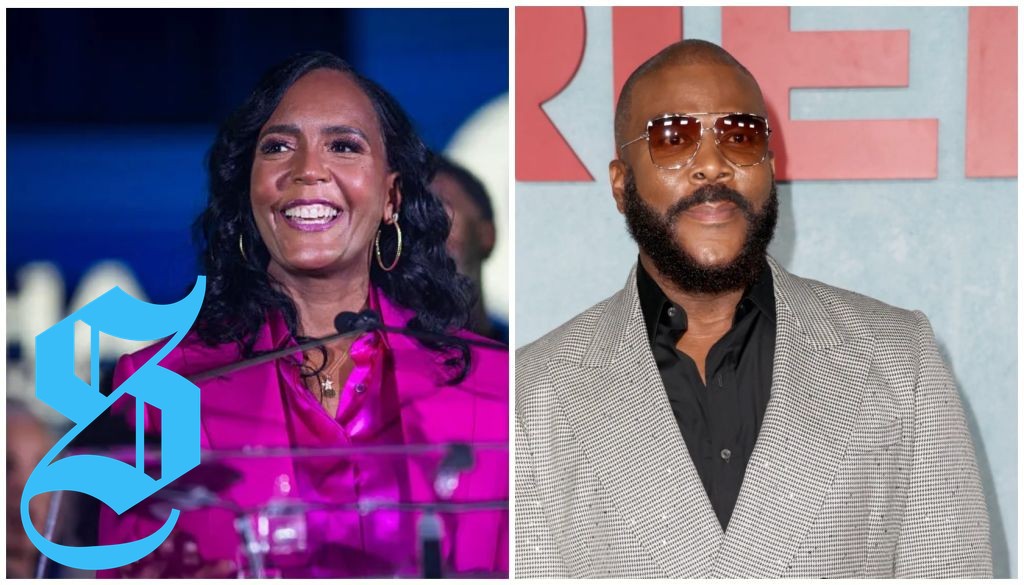
In a groundbreaking move that has sent ripples through both political and entertainment circles, Keisha Lance Bottoms has appointed Tyler Perry to her transition team following her historic election as Georgia's first Black female governor. The decision comes with mixed reactions, representing both a bold political strategy and a potential ethical quagmire.
Bottoms' ascent to the governor's seat marks a significant milestone in U.S. history, showcasing the increasing leadership roles that women of color are taking in politics. Following her historic win, she stood on the steps of the Georgia Capitol, energized and resolute, stating her desire to hit the ground running. "We need to be ready to govern on day one," she emphasized, according to reports from Complex. In her announcement, Perry was named alongside notable figures such as Arthur Blank and Michelle Nunn as part of her transition team. The unofficial co-chairs include significant political names like Jon Ossoff, Raphael Warnock, and civil rights icon Andrew Young.
Perry's stature as a billionaire media mogul and the owner of Tyler Perry Studios has made him an essential figure in Georgia’s entertainment economy and beyond. Under Bottoms' leadership as mayor, she was instrumental in the establishment and expansion of Perry's studio on the site of the former Fort McPherson Army base, a decision that has drastically changed the landscape of Atlanta’s film industry. She lauded Perry as “an entertainment mogul” and highlighted his role as a philanthropist within the Georgia community. This synergy between governance and entertainment plays a pivotal role in Bottoms' vision for leveraging media both as a form of cultural influence and economic growth.
However, Perry's recent legal troubles add a layer of complexity to the collaboration. Two actors—Derek Dixon and Mario Rodriguez—have filed lawsuits against Perry. Dixon's claim seeks $260 million in damages, while Rodriguez's lawsuit asks for $77 million, both accusing the producer of coercion and unwanted advances. Although Perry has denied all wrongdoing, these legal issues raise concerns about his suitability for a role in the governor's transition team. Critics worry that his involvement could complicate governance, especially in legal contexts that may affect his ability to perform his duties effectively.
The appointment elicited mixed reactions on social media. Some users expressed support, viewing Perry's influence as a valuable resource for economic and cultural development in Georgia. One Twitter user reacted positively, stating,
“Tyler Perry knows how to create jobs and uplift the community. Good choice for the transition team, Bottoms!”Conversely, others voiced concerns regarding the optics of having someone facing serious allegations in such a pivotal role. Another social media user lamented,
“Having Tyler Perry on the team raises questions about ethics and governance. Can we really separate his legal troubles from his role in the state?”
Bottoms' decision to bring Perry onboard is certainly not unprecedented. Their collaboration has been ongoing for years, including her involvement as an executive producer on Perry's project She The People slated for a 2025 release. This partnership has prompted criticism in some quarters, with detractors arguing that the closeness of their professional relationship might blur the lines of accountability. However, Bottoms defended her choices, highlighting her belief in intuition and the significance of compelling narratives that can spur societal change.
“THANK YOU to everyone who has tuned in and made ‘She The People’ the hit show we knew it would be. I was encouraged by some very well-meaning people not to join as an Executive Producer of this project. But I have learned that intuition is a superpower,”she stated on Instagram.
Despite the buzz around Perry's place in her transition team, many observers underscore the importance of what this means for governance in Georgia. The intersection of politics and entertainment represents an evolving landscape where leaders can draw from a web of creative and economic resources. The decision reflects Bottoms’ broader strategy of engaging multifaceted community leaders who can offer diverse perspectives and leverage their influence for change.
As Bottoms prepares to navigate the complexities of her new role as governor, her choices will not only affect the governance of Georgia but could also serve as a precedent for future leaders embroiled in similar partnerships between politics and pop culture. Looking ahead, there are important questions to consider: How will Bottoms balance Perry's involvement amidst his ongoing legal battles? What kind of oversight will be necessary to ensure that personal entanglements don't overshadow her administration's mission? The coming months may shed light on the implications of this partnership and the new chapter in Georgia's political landscape.

No comments yet. Be the first to share your thoughts!