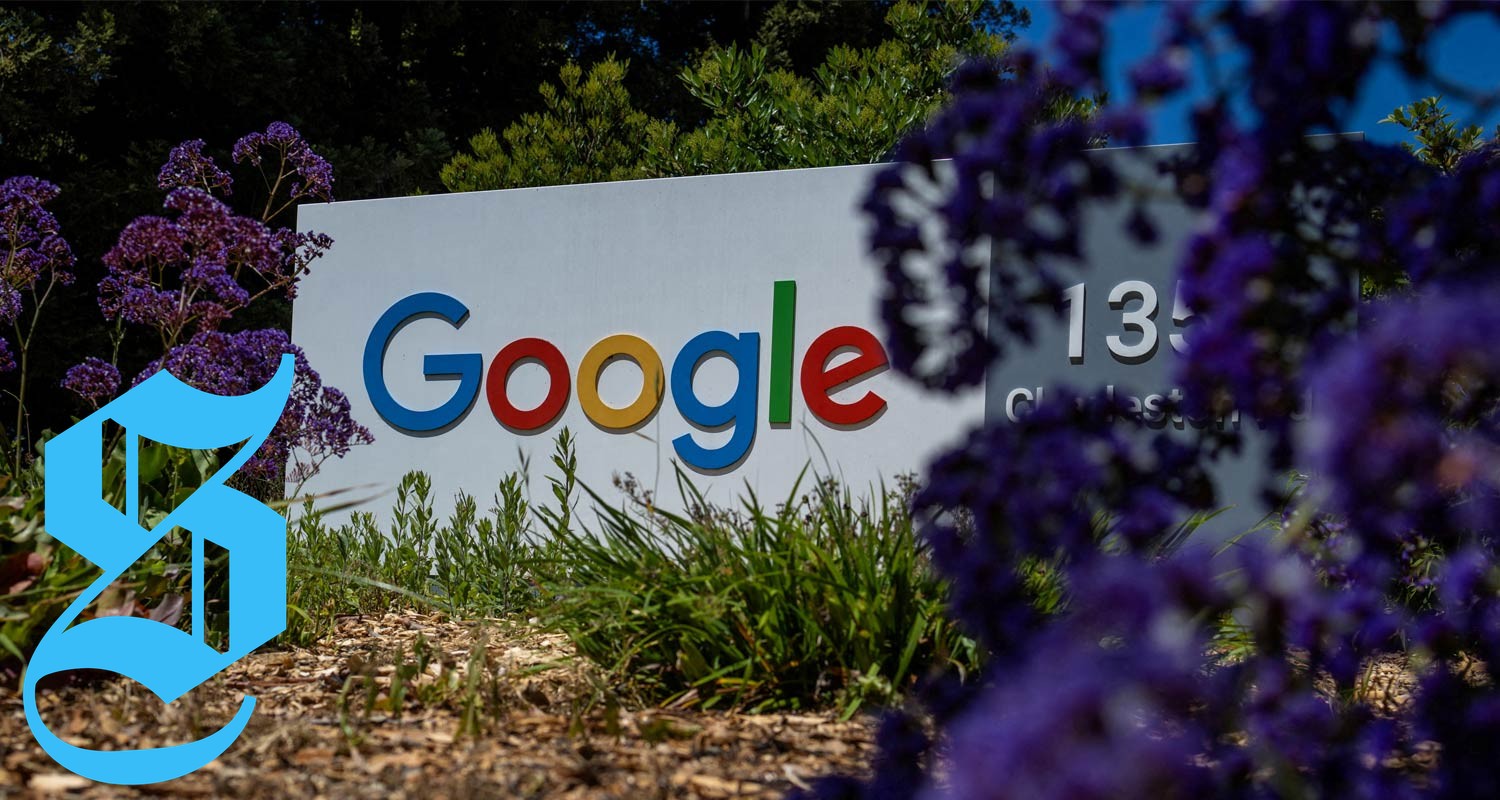
Alphabet's Performance Under Scrutiny
The parent company of Google, Alphabet, has recently found itself in troubled waters, grappling with disappointing results within its core search advertising business. Investors have not held back their concerns as the company has reported a substantial cash burn associated with its ambitious efforts to enhance its artificial intelligence (AI) capabilities.
In the latest earnings report, shares of Alphabet dropped an alarming 10% in after-hours trading, after revealing that total third-quarter revenue amounted to $127.6 billion— falling short of analysts' projections of $128.2 billion. While Google Cloud revenue showed a promising increase of over 100%, there was notable weakness within the advertising sector, prompting skepticism about the company's growth trajectory moving forward.
Understanding the Disappointment
Google’s advertising revenue, a significant revenue stream for the company, was reported at $82 billion, whereas the expected figure was $83.4 billion. This $1.4 billion miss has raised eyebrows throughout the financial community, especially given the current competitive landscape dominated by rapidly advancing AI technologies.
“In a market worried about AI cannibalizing the franchise, investors need to see search accelerating, not decelerating,” remarked
Dave Wagner, portfolio manager at Aptus Capital Advisors
Further complicating matters, Alphabet announced a staggering negative free cash flow of $9.1 billion. This marks the second consecutive quarter of such negative performance, a significant departure from the company’s history of prolific cash generation over the previous two decades. Last quarter saw a $5.9 billion cash burn due to heavy expenditures in cloud capacity and AI enhancements, which has left many investors on edge about the company’s financial stability.
AI: The Double-Edged Sword
Alphabet's chief business officer, Philipp Schindler, attributed the unexpected slowdown in search advertising growth to increased utilization of AI Mode, a newly implemented chatbot interface being trialed for the search engine. The shift to AI-driven interfaces, while promising in enhancing user experience, also brings uncertainty to advertisers who may be less willing to invest in an evolving landscape.
During the earnings call, Schindler announced that advertisements in AI Mode would soon be rolled out to international markets, which could provide a new avenue for recovering lost revenue. However, the timeline remains uncertain and raises questions about the effectiveness of these new advertising structures within AI frameworks.
The Future of Investment
Prospective capital expenditures loom large over the financial horizon. Alphabet’s CFO, Anat Ashkenazi, indicated plans to increase capital expenditure significantly, projecting it could rise from $195 billion in 2026 to upwards of $205 billion in the following year. Such aggressive spending plans have led some analysts to speculate about the potential adverse effects it may have on cash flow and investor sentiment.
“A $300 billion capital expenditure number could potentially scare the market, because free cash flow now is finally negative,”
Jeremy Saltsburg, senior investment officer at Check Capital
Contrasts with Competitors
In sharp contrast to Alphabet, Microsoft also reported earnings, and its shares surged over 5% due to positive free cash flow that surpassed analyst expectations. The stark difference in performance emphasizes how rapidly the competitive landscape is shifting in technology—certainly a landscape dominated by AI advancements.
Alphabet has attempted to offset concerns around disappointing ad performance by promoting its cloud computing unit. Bringing Thomas Kurian, CEO of Google Cloud, onto the earnings call for the first time underscores the importance of their cloud venture to the company’s overall narrative moving forward.
Propelling Google Cloud Forward
Remarkably, Google Cloud's revenue soared to over $30.71 billion in the third quarter, eclipsing previous estimates. Kurian attributed this rise, in part, to significant sales of their tensor processing units (TPUs), developed to compete with Nvidia’s graphics processing units (GPUs). The recognition of revenue from direct sales of these TPU systems marks a step forward in their hardware and software offerings.
Nonetheless, Ashkenazi cautioned that the buildup of TPU inventory may further pressure Alphabet’s free cash flow, demonstrating the ongoing challenges the company faces as it strives to stay competitive in the cloud market.
The Road Ahead: AI Data Centre Investments
The demand for AI capabilities is projected to drive extensive investments from tech giants, as Alphabet, Microsoft, Amazon, and Meta are estimated to shell out over $700 billion by 2026 to bolster their AI data centers, chips, and networking capacity. However, with advanced chips and data center power increasingly scarce, Alphabet’s ability to grow while maintaining quality remains a significant concern.
Repositioning with Gemini 4 Carbon
As uncertainty loomed over the earnings report, Google sought to reassure investors by unveiling its new Gemini 4 Carbon model. This announcement aimed to quash rumors about its declining position in the AI race, with CEO Sundar Pichai asserting that the company remains “leading at the frontier.”
Nevertheless, doubts linger. Analysts at Bernstein questioned the timing of Gemini 4’s deployment, suggesting it might have been expedited in response to lackluster financial metrics. “Did Google rush the deployment of Gemini 4 models as an offset to softer financial metrics? And are the models ready for commercial deployment?” they pondered, signaling a critical examination of Alphabet’s strategic maneuvers.
Conclusion
As Alphabet navigates the complexities of rapid technological change and investor scrutiny, its ability to rebound in the search advertising market will be pivotal in reestablishing confidence among shareholders. Emphasizing advancements in cloud technology alongside dominating AI innovations may provide a roadmap, but it comes with its own set of challenges, highlighting the need for a delicate balance between investment, risk, and growth.
Our Take
This recent earnings report underscores the precarious balance Alphabet must maintain between aggressive AI investment and its core search advertising performance, as future profitability hinges on demonstrating that AI can enhance rather than detract from its established revenue streams.
Quick Answers
What were Alphabet's financial results for the third quarter?
Alphabet reported total revenue of $127.6 billion, which fell short of the analysts’ estimate of $128.2 billion, and a net income available to common shareholders of $26.17 billion, down 25%. Adjusted earnings per share were $2.67, missing Wall Street's target of $3.02.
How did Google's Cloud business perform?
Google Cloud's revenue more than doubled to $30.71 billion in the third quarter, beating expectations, and its backlog grew to $561 billion, with anticipation of recognizing over 55% as revenue within the next 24 months.
What financial issues is Alphabet facing?
Alphabet reported negative free cash flow of $9.1 billion in the latest quarter, marking its second consecutive quarter of negative cash flow, primarily due to aggressive spending on AI and cloud capacity.
What impact did AI Mode have on Google’s advertising revenue?
Chief business officer Philipp Schindler attributed a larger-than-expected slowdown in search advertising growth to greater use of AI Mode, indicating that the company is still experimenting with ads in this new interface.
What are the concerns of investors regarding Alphabet's future expenses?
Investors are concerned about Alphabet's planned increase in capital expenditure from $195 billion to $205 billion in 2027, fearing that overspending could lead to continued negative cash flow and hinder performance against rivals in the AI sector.


No comments yet. Be the first to share your thoughts!